The politics of canon

Jan 24, 2015-Nepali literature in English can be tested by certain tenets to legitimise its canonicity. Even if we use Western tenets to assess the validity of writing, canonicity can be fulfilling. This does not mean that the canonical status of Nepali literature in English has started questioning the Western canon and has started functioning as a counter-canon. But one thing is certain: Nepali English writers, whether writing from within Nepal or abroad, have earned critical acclaim. From this perspective, there is no doubt that Nepali literature in English has already established its canonical status. There are also many who oppose this argument primarily out of political interest, insisting that the very idea of canon does not exist in Nepali literature in English.   
The canon debate
Most interestingly, this ongoing debate, motivated by politics, over the nature and status of canon has been there since the 1990s, much of which is rooted in the question of whether it is the right time to start debating the issue. “In Nepal,” observes Abhi Subedi, “the canonicity of the postcolonial legacy continued to dominate the literary culture even without the use of English.” For him, one of the objections of a canon of Nepali literature in English is the question of authority: who should have the power to determine what works are worth reading and teaching?
Having evolved over six or seven decades, Nepali English literature now stands by itself as a body of literature and extends different literary tastes to a country where English is often considered an important second language. It expanded its horizons to the global arena after the 1990 political change in Nepal when writers like Samrat Upadhyay and Manjushree Thapa started publishing internationally acclaimed works. No doubt, Upadhyay and Thapa can be considered as part of the canon of Nepali literature in English, after Laxmi Prasad Devkota, who pioneered the body of literature and was a canonised writer himself. Should we not start talking of our own making of the literary canon? This question in turn leads to more questions: which Nepali writers and works in English should be included in the canon?
Devkota and after
Following in the footsteps of Devkota, a host of other Nepali young writers who write in English have appeared in the post-1990 period. Sushma Joshi, Rabi Thapa, Sheeba Shah, Ajit Baral, Richa Bhattarai, MK Limbu, and Aditya Man Shrestha are familiar names. Another host of writers come from academic backgrounds. Writers like Abhi Subedi, Padma Prasad Devkota, Sanjeev Uprety, Sangita Rayamajhi, Hriseekesh Upadhyay, Ammaraj Joshi, and Rajan Prasad Pokharel have emerged from university platforms.      
Yet another group of writers emerges from translated works. Ramesh Vikal, Lil Bahadur Chhetri, Parijat, Dhurba Chandra Gautam, Banira Giri, Bharat Jangam, BP Koirala, Vijaya Malla,
Sita Pandey, Parashu Pradhan, Narendra Raj Prasai, Lakshman Rajbanshi, Shiva Kumar Shrestha, Padmawati Singh, and Narayan Wagle are among popular names.    
There are also writers and translators whose mother tongue is not Nepali, but have contributed a lot in this area. To name a few, Wayne Amtzis, Yuyutsu RD Sharma, Greta Rana, Philip Pierce, Larry Hartsell, and Michael Hutt are regular contributors. There is also a list of writers who write in English in the diaspora. This group comprises of Indian Nepalis and Nepalis who permanently live in foreign lands.
But the list of names above does not actually determine the canon; they need to be tested by certain parameters in order to validate their canonical status. If there is a canon as such, should they all be included in it?
The canonisation process
The literary canon is a list of writers and their works, which are accepted as part of an authority in a certain period of time. If canonised, they become institutionalised over time by consistent inclusion on university syllabi and are read widely. Seen in this way, the question of the status of Nepali literary works in English as canonical works has yet to be determined: should they be an important part of the educational curriculum, informed by the literary canon? This question has been consistently debated by both academics and non-academics since 1990.   
Though Nepali literature in English is not only considered a part of the world literature, it is also considered an essential component of Nepali literature. Such developments indicate that Nepali literature in English is entangled in the process of canon formation. Since a discourse of literary canon-making harkens back at least as far as the early 21st century, it is now time to explore the literary canon in question. It is necessary to do so in order to provide Nepali English literature a basis for future development.  
If not canon, what then?
As far as the inclusion of Nepali English literary texts in the educational syllabi is concerned, the growth of English literature in Nepal has been significant after 1990, especially in terms of the number and quality. Its growth carries implications in the field of English language teaching.
Now, schools and universities can choose from literary works in English written by Nepali writers as material for English language classrooms. In the future, this will create a new dimension of discourse on teaching of the English language and literature in Nepal.    
In spite of the debate and controversy over the canonisation of Nepali writers and their works in English, it is important to bring them to the fore, considering English literature produced in Nepal is an evolving discourse within the realm of the Nepali literary world. Together, the political aspects of canonisation should never be forgotten.  
Pun teaches and researches on topics related to Nepali writings in English
minpun@gmail.com
Published: 25-01-2015 09:46

Nepalese Novels in English Translation

The authenticity of the English translation of Nepalese novels has begun since 1972. The first translated novel is SIRISKO FUL written by Parijat.
This book was jointly translated by a Nepalese Tanka Bilas Varya and a foreigner Sondra Jendestine entitled BLUE MIMOSA and it was published by Sondra Jendestine himself in 1972.
It seems that the tradition of translating the novels has begun henceforth.
In this article it is attempted to present the list of the translated works in detail chronologically.
After the publication of abovementioned novel Blue Mimosa, the historic novel Seto Bagh written by Diamond Shamsher Rana translated by Greta Rana with the titled The Wake of the White Tiger was published by Balika Rana in 1984.
In the same year another novel entitled Khaireni Ghat written by Shankar Koirala was translated by Lary Hartsell entitled KHAIRENI GHAT. It was published by Ratna Pustak Bhandar in 1984. Since then it is found that the translation work has been extended. Similarly it is found that a number of novels were translated in the decade of 1990.
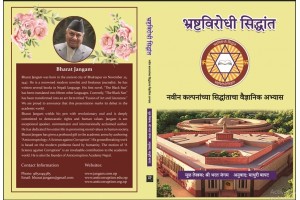
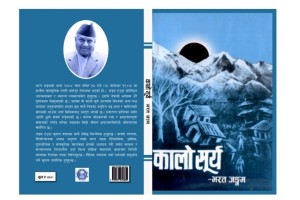
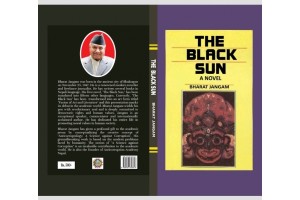
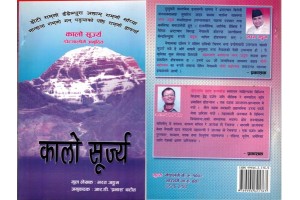
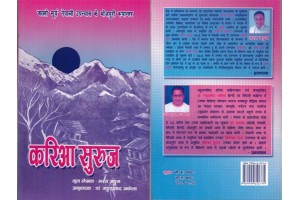
Accordingly, the novel entitled Ojhel Parda written by Dr. Taranath Sharma was translated by Hartsell with the title BLACKOUT that was published by Nirala Publications in 1990. In the same year, KALO SURYA written by Bharat Jangam was translated by Saroj Kumar Shakya with the title BLACK SUN and was published by Nirala Publications.
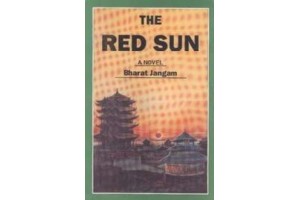
The second novel Rato Gham of Bharat Jungum was translated by Saroj Kumar Shakya entitled THE RED SUN was published by Indu Publications of Banaras in 1991.
The novel Alikhit written by Dhurva Chandra Gautam translated by Philip Pierce with the titled UNWRITTEN was published by Malla Publications in 1992.
The novel Basain written by Lil Bahadur Chhetry was translated by Lary Hartsell entitled LOST HOMESTEAD was published by Aankura Publication of Gantok in 1993.
The novel Bhakpatra written by Kabita Ram Shrestha was translated by Lary Hartsell entitled CONFESSION was published by Book Faith India in 1995.
The novel Pallo Gharko Jhyal written by the novelist Govinda Bahadur Malla Gothale was also translated by Lary Hartsell entitled the WINDOW OF THE OPPOSITE HOUSE was published by Book Faith India, Delhi in 1995.
Two translated novels were published in the year 1999. Among them the novel Khoj written by Gita Keshary was translated by Pratik Pradhan and published by Vani Prakashan, Biratnagar. The next novel Roopmati written by Rudra Raj Pandey was translated by Shanti Mishra with the title ROOPMATI and was published by Book Faith, India in 1999.
When we review in general it is found that the translating work of the Nepalese novels in English was begun in 1972 to 2000 A.D. Altogether 12 novels of 11 novelists were translated and published in the period of three decades.
Now, let us look through the new millennium.
In the first year of the new millennium 2001 A.D. two novels of two novelists were translated and published. Among them, the first is Kumari Shova of Bijaya Bahadur Malla with the title KUMARI SHOVA translated by Pierce and published by Royal Nepal Academy in 2001.
In the same year 2001, Swapna Sammelan of Manuj Babu Mishra was translated with the title DREAM ASSEMBLE by Mohan Mishra and published by Bagar Foundation.
Another historical novel named Prithvi Narayan Shan written by S. P. Asha was translated with the title PRITHIVI NARAYAN SHAH by Prava Krishna Paudel and published by Vaani Publication, Biratnagar in 2003.
The novel Pratyak Thaun Pratyak Manchhe written by Peter J. Karthak and translated by the novelist himself with the title EVERY PLACE EVERY MAN was published by Bajra Books in 2004.
In the year 2005 A.D. three novels were published. They were Sumnima written by B. P. Koirala and was translated by Taranath Sharma with the title SUMNIMA and published by Bagar Foundation.
Likewise, the novel Karagar written by Banira Giri was translated by Ann Hakins with the title THE PRISON and was published by Tib Lamichhane.
In the same year, the novel Usko Logne Ra Biralo written by Indira Prasai and translated by Brajesh with the title THE HUSBAND and THE CAT was published by Arjun Sitaula.
In the same year the novel Phoolko Atanka written by Dhruba Chandra Gautam and translated by Philip Pierce entitled TERROR OF FLOWERS was published by Ratna Pustak Bhandar.
Apart from these work, some portions of the novels of five novelists published in the work entitled NEPALESE LITERATURE. The book was published by then Royal Nepal Academy under the chief editorship of Madhav Lal Karmacharya and the editorship of Govinda Raj Bhattarai. Those novels were RUPMATI of Rudra Raj Pandey (translated by Shanti Mishra) and Muluk Bahira of Lain Singh Bangdel and translated with the little “OUT OF THE COUNTRY by Keshar Lal, Sirisko Phool of Parijat translated by Govinda Raj entitled BLUE MIMOSA, Phoolko Aatanka of Dhruba Chandra Gautam translated by Pierce with the title “REIGN OF TERROR, and Jyoti Jyoti Mahajyoti of Daulat Bikram Bista translated by Keshar Lal with the title THE LIGHTS OF LIGHT.
The above mentioned book was published by then Royal Nepal Academy in the year 2005.
While accessing it is found that 21 novels in total of 19 writers in the period almost of three decades from 1972 to 2005 were published. Those novels include 2 novels each of Bharat Jungam and Dhruba Chandra Gautam. In this field includes 4 women novelists– Parijat, Gita Keshari, Indira Prasai and Banira Giri.
15 translators have contributed to translate these novels.
Likewise, a novel Palpasa Café written by Naryan Wagle and translated by Vikas Sangruala entitled PALPASA CAFÉ was published by Nepalaya in 2008.
Meanwhile, there are some books published in English translation of the collection of various stories written in the Nepali by the various writers.
In conclusion the novels of different topics historic, depicting social psychological political, zonal etc of the Nepalese literature will help the English speaking people and other language speaking people enjoy test of the Nepalese novels.
This article was prepared by making interview focusing on the Literature Scene in the Nepalese Society with the respected politician and well-known litterateur late Ishwor Man Ranjit. But due to vivid causes it could not be published. Today with the great opportunity this article has come out. With publishing this article, hopefully the dream of late litterateur Ranjit]:’s contribution in the filed of Nepalese literature would be fulfilled.
SIRISKO FUL = BLUE MIMOSA
SETO BAGH = THE WAKE OF WAHITE TIGER
KALO SURYA = BLACK SUN
KHAIRENI GHAT = KHAIRENI GHAT
OJHEL PARDA = BLACKOUT
SWAPNA SAMMELAN = DREAM ASSEMBLE
RATO GHAM = THE RED SUN
ALIKHIT = UNWRITTEN
BASAIN =LOST HOMESTEAD
BHAKPATRA =CONFESSION
h:PALLO GHARKO JHAL = WINDOW OF THE OPPOSITE HOUSE
KHOJ= SEARCH
ROOPMATI =ROOPMATI
KUMARI SHOVA = KUMARI SHOVA
PRITHIVI NARAYAN SHAH= PRITHIVI NARAYAN SHAH
PRATYAK THAUN PRATYAK MANCHHE = EVERY PLACE EVERY MAN
SUMNIMA = SUMNIMA
KARAGAR =THE PRISON
USKO LOGNE RA RATO BIRALO = THE HUSBAND & THE CAT
PHOOLKO AATANKA = TERROR OF FLOWERS
MULUK BAHIRA =OUT OF THE COUNTRY
JYOTI JYOTI MAHAJYOTI = THE LIGHTS OF LIGHT.
PALPASA CAFE = PALPASA CAFE

Reviews of The Red Sun from Rishikesh Shah

More than a decade ago Mr. Bharat Jangam Proved his talent as a novelist by writing a novel in Nepali called "Kalo Surya" which has been subsequently translated into English (The Black Sun) and several other languages including Russian and Chinese. The novel exposed rather the core of Nepal's partyless panchyat systems through the simple method of the narrator's apparently well-meaning and innocent conversation with persons in different walks of life. Without giving even the panchyat regime any excuse to ban it, 'Kalo Surya" created quite a stir among the Nepali reading public by arousing their ire and conscience against the unprecedented growth of hypocrisy, corruption and immorality in Nepali society.

In writing this novel " Rato Gham" (The Red Sun) Mr. Jangam has once again followed the same method of direct narration or monologue in storytelling. This time the theme is of course different and all the more fascinating to its readers life, morals and manners in communist China with a focus on their repercussions on the indigenous people of the so-called autonomous region of Tibet. The story opens with a scintillating account of the inquisitive narrator standing at a point a little beyond the friendship bridge at Liping, Kodari and looking up at freshly pointed houses shining in their whitish splendor in the township of Khasa (Zhangmus) on the Tibetan side. The novel fittingly ends with a description of the narrator's dreary and leisurely trek from Kodari up and down the steep mountain gorges and across the windswept plain and snow deserts to Lhasa at the roof of the world constantly evoking in the novelist's mind historical memories of Nepal's association with the area and its people.

Meanwhile the novelist had in the intervening period already visited the famed and flourishing Chinese cities and metropolises of Guangzhou (Canton), Shanghai, Shenzhen, Tianjin and Beijing approaching them from the British crown colony of Hong Kong on the outskirts of the Chinese mainland. He had also in due course a rich and rewarding first-hand experience from thrilling encounters and dubious dealings with the Chinese people of various trades and professions under different circumstances. Unlike other countries in the world, Nepal has no sizable 'Han Chinese' minority as a permanent component of its population. As a result, Nepali in general have had little or no opportunity for getting to know and understand the Chinese people at an unofficial and popular level. If this novel will enable Nepali readers to share vicariously the author's experience with the Chinese, it will also provide the non-Nepali readers an insight into the Chinese ways and sensibilities as perceived by a creative young Nepali literature.

In the end, I wonder whether the novelist has any message for his readers. The subtle hint I for one have been able to deduce is that the first flush of victory and exultation brought about by China's 1949 revolution may prove to be after all short-lived and age-old historical conditions and deeply ingrained habits of thought may prompt that society to move one day in a different direction, along the path of ancient wisdom as dictated by the principles of non-violence, fellow feeling and good neighborliness.

This is further highlighted by the author with a sharp focus on the guidelines bequeathed to posterity on an inscribed tablet by Libin, who had been esteemed as the designer and builder of the watershed management in areas adjacent to Chengdu. In the plaque, Libin, talk about the wisdom of canalizing the devastating force of the mighty and irresistible river's mainstream by diverting it in numerous channels for irrigation and other constructive purposes wherever and whenever possible. The novelist rightly implies from Libin's teaching that an excessive concentration of political and economic power is likely to act as a blind force with destructive consequences, whereas reasonable delegation of authority to the lower levels of government and society may be conducive to the greater good of mankind. 
I hope that the readers will receive this novel with the same spirit of welcome and enthusiasm as they received the novelist's earlier works.

Rishikesh Shah
Kathmandu, Nepal.
23rd March 1993.

Books reviews from Prof. I.K.Sharma

Something is rotten in the state of Denmark.

Put the word Nepal in place of Denmark and the story of THE BLACK SUN by Bharat Jangam is, in a large easure, complete. The book written originally in Nepali first appeared in 1979 in Kathmandu. Its publication triggered off a debate in the literary, social, and political circles of that country. Because of that it drew a letter of high acclaim from the most respectable statesman and celebrated writer of Nepal, Mr.B.P. Koirala. Since its first appearance the book has run into four editions and recently efforts are underway to bring out the book in Hindi, Japanese and other major languages of the world. I had the opportunity to go through the English version of the book. 
What strikes a lay reader at the start is that the writer does not chase some Yeti of his fancy for personal pleasure. Sure enough he does not practice the gentle art of looking away; instead, he fixes his gaze at the obvious- the actuality. This breaking of new ground may be one of the reasons that the book created such a stir in the minds of the Nepali reading public.

The aim of the writer id to hold the attention of the reader to the fact that the present day Nepal has unwittingly come in the vice-like grip of a many-footed beast, called corruption, and unless the Nepalese strive and strive collectively, they will not be in position to free themselves from its hold for a long time to come. To give this idea a form he contrives a story of a person who upholds the value of Truth till the end although in the process he sees much that is reprehensible and also loses the most valuable that had come to him from his ancestors-a piece of land.

The novel is a first person account of a man who is a standard-bearer of Truth (a specimen of the Gandhian era in India). To comprehend the multi-faced actuality of Nepal, the 'I" in the novel has multiple roles to play it is a guide, an investigator, a discover, a watcher, a philosopher, a dreamer, and above all, a willing sufferer for the sake of a noble cause. His faith in his ideal, in spite of the muck around him, remains unshaken and he sincerely believes that Honesty or Truth or Integrity or any such ideal should not merely be an item of personal luxury but it should be a social virtue to be seen in the daily life of people. In search of this he sets out of his home and threads his way through many major departments of the His Majesty's government where, to his utter dismay, it is conspicuous by its absence. From Kathmandu International Airport through Ason Bazar to the Judiciary he, like the bewildered highland boy, does not find his hand full of sugar.

The novel has seven section in all, and each section is named after the day of the week. Beginning with Sunday the story ends on Saturday-meaning from Light to Darkness. Each day takes the narrator-hero to different fields of public activity and each field he finds overflowing with corruption. In the novel this gradual unfolding of the carpet serves a two-fold purpose. On the one hand, it underscores the point that corruption public life is a perpetual violence on the integrity of an individual, besides being the rape of a system. On the other, it highlights the inner tension of the narrator who is in quest of a clean public life. Thus the hero stands between two truths:the truth he abhors and the truth he adores, the truth he sees and the truth he aims at.

Along this journey, not adventure, he meets characters of various hues: a peon of twenty-five year standing, who very well knows (not practices) the mysterious ways of highly-placed officers, an unsophisticated highland boy ignorant of the ways of city life, an honesty engineer, named Tirtha Ratna and a contractor (Bikram) who follows the golden mean. Pitted against them are a smuggle, Dorje (A Tibetan refugee named Dukpa) who in course of six years has become a millionaire, a drunken politician ( a former Cabinet Minister) who meets the hero at midnight with Rs 20,000/- on him in a restaurant and spends rupees thirteen hundred in one go, the office at the Kathmandu International Airport whose 'daily income exceeds his three months salary' and 'in case he falls into the trap there is no power in Nepal that can harm his single hair,' and a lawyer, who in tends to extract the four golden teeth of the hero(represented his four ideals). 
An odd man out amidst them is the hero who finds a nefarious system erected around him and the common man. The system, the writer clearly brings out, is governed and run by a trio of unscrupulous businessman, the wily administrator, and the unfeeling politician. Their sinister collusion has turned the old Shangri-La into a new haven of cheats, swindlers, and exploiters of darkest hues.

From the start to the finish, the characters in the novel directly or indirectly hints at the areas of darkness in the life of the nation: exploitation of the innocent and artless by the smart ones, unpunctuality in the offices, indifferent attitude of office-goers to their works, underweighing in the market, scarcity of essential items like sugar, salt, and even 'inedible oil', labyrinthine justice system, the craze for westernization, and above all the 'yellow fever' to use the Australian expression for money mania. All this has endangered the life of the nation itself. In the novel is summed up by moderate Bikram this way:

'If they just take something of the fruit, it is natural. But here they are going to destroy the tree itself and swallow its roots and branches. Nobody fears anybody... Nobody is pure and holy.' (emphasis added) The writer thus succeeds in reflecting the public crisis in the private mirror of his fictional alter ego.

In essence The Black Sun is an authentic microcosm of the contemporary Nepal. It has the silent thunder of a warrior, controlled rage of a priest, and the internal restriction of an artist. Its reading impose a heavy burden on the conscience of a sensitive reader.

Prof. I.K.Sharma, 
Department of English
University of Rajasthan
Jaipur, India.

The Black Sun Review from Dr. Tara Nath Sharma

'The Black Sun' by Bharat Jangam is an English rendering of his "Kalo Surya" originally written in Nepali. 'The Black Sun,' as it stands, is not fashioned in the traditional mold of novel with an elaborate story intrinsically woven into a centripetal plot construction. The whole design is a sort of centrifug approach clearly compartmentalizing the work into seven separate episodes which are connected to the central theme the author wants to concentrate on only by the presence of the same protagonist trying to search for truth, integrity and essential humanity at the glaring backdrop of the partyless system. 

Represented by the seven days of the week starting from Sunday, the seven sections of the book are, in fact, seven short stories each of which is a scathing attack on corrupt officials, black marketers, smugglers, legal authorities and drunken politicians. Structurally, 'The Black Sun' is loose, hardly concentrating on formidable characters. 

A fleeting panorama of immorality, degeneration and dissipation is presented by a series of hurried visits by the protagonist in his futile search for order and decency. In fact, the last section focusing on never-ending litigation wrangles over patrimony reveals absurdity as the main theme that gives the otherwise journalistic sketches a lasting literary foundation for 'The Black Sun". 

The inherent quality of fiction that holds the attention of most readers is suspense which is lacking in it because the author's primary purpose here is not telling an interesting romantic story with attractive characters, but he is whole heartedly concerned with the presentation of a pungent satire on the partyless anti-democratic Panchyat System. That is why no female character with any significance appears on the scene anywhere. Except a very short glimpse of Miss Shashi Rana at Mahesh Kumar Kedia's office, a young woman serving coffee at smuggler Dorje's miner living room and occasional references to Jeevan's wife and the wife of the protagonist, all important characters are monotonously males. True, in a male world of money and malpractice, bootlicking and flattery there is no place for the fair sex reputed for love, sympathy, honesty, co-operation and fellow-feeling. Completely devoid of human sensibility Mahesh Kumar Kedia, Shanta Ram and Smuggler Dorji worship the Devil. 

The Protagonist discovers a whole new world of Ram Pant corruption. From the top echelons of bureaucracy, business and government construction to the lower depths of human misery the author exposes social malaise in clear and unmistakable terms. It is, in actuality, a political expose, an honest delineation of present-day Nepal, a cancer eating the body politic of the country slowly but surely, gradually but definitely. There is in the blood of every administrative official, every businessman, every technical expert and every politician in the country an incurable presence of cancerous germs that will certainly destroy the every fabric of our cultural and democratic existence. Bharat Jangam should be congratulated for putting into the mouth of his character named Mahesh Kumar Kedia the central truth that pricks the national sentiment of any sensible Nepalese: "There is no country in the whole world where you can collect currency not as easily as you can collect here." An under developed country like Nepal, where almost eighty percent of people are below internationally accepted poverty line, this kind of assertion with such confidence can come only through the mouth of a monster like Mahesh Kumar. To our mind comes at this juncture the inhuman misery of Ethiopia where a monolithic anti-democratic obstinacy persisted for sixteen years. Nepal had to make a deliberate choice between two paths -- the path of poverty, hunger, famine and total annihilation on the one hand and on the other the path of freedom, efficiently. But unfortunately if the same oily people, thugs and professional bootlickers that surrounded Marich Man and the Interim Ministers are permitted to swarm the new leaders, the promise made by the protagonist will never be fulfilled: "That day will certainly come when these corrupt (officials) will be drowned in the river of publichat red. They will parade on their face and chest with bare feet. And the soil of this land will take revenge in due course. Then an honest man like you will be fully rewarded." 

Let God be true. We are waiting impatiently for that day to dawn on this land of Mount Everest. True writer is rooted to the soil he stands proudly on. A grassroots author is acclaimed internationally for his depiction of what he intimately knows, is humanely convincing and artistically penetrating. A writer should, as has been submitted, be judged for his in-depth vision of human living, his artistic exposition of social and individual ennui or fervent activity, and his sense of belonging and participation in what's going on in the world. A literary artist is at once an interpreter and a critic. He is, as Shelly says, 'an unacknowledged legislator of the world.' To fathom the depths of human mind and to soar in the as yet unraveled and undiscovered vast recesses of space a literary writer is vocationally dedicated. 

Bharat Jangam is a social writer with a political vision. His cherished goal is the achievement of honesty, integrity and morality in the conduct of social and individual life. It is indeed a far cry, but nevertheless his only goal in 'The Black Sun."

Reviews

JANGAM FELICITATED IN BANGLADESH
Kathmandu Post, February 1, Sunday 1998
By a Post Reporter

Nepali litterateur and novelist, Bharat Jangam has been felicitated in Bangladesh, recently. According to an information reached here, various Bangladeshi literary figures and journalists hailed Jangam’s talent, and welcomed the novelist’s recently translated the Black Sun into Bangladeshi literature.

Addressing from the Chair, Bajrul Rehman, Editor of “Daily Sambad” expressed sadness that despite being so near Nepal and Bangladeshi litterateurs and journalists have minimum interaction with each other. He, however, expressed happiness to find one of the Nepali literary creation, the Black Sun, into Bengali language.

In the programme organised by Dhaka Publication, Ambassador of Nepal to Bangladesh, Mr.Lok Bahadur Shrestha, said that despite lots of interest, there was no means for Nepali people to enjoy Bangla literature.

Earlier, senior litterateur Mr. Sahebuddin Ahmed said that Jangam’s work was not only popular in South Asia, but it has gained reputation in Europe and America as well. Ahmed said that he opted to translate the Black Sun into Bangladeshi, after being convinced by both Nepali and English versions of the novel.

On the occasion, Bharat Jangam thanked Bangladeshi literary circle for nice words and encouragements. “This is not only a felicitation to me, but it is a good will gesture shown by Bangladesh to Nepal, Nepali society and Nepali literature,” he said.

The programme was attended by well known literary figures like Mr. Jyoti Prakash Dutta, Mr.Santosh Gupta, Dr. Sultana Nahar, Mr.Nirmalendu Goon, Mr.Sohara Bhasan, Mr.Masuk Choudhary, Mr.Khalim Azad, Mr.Kujhesh Salma Abhullah etc.
Mr. Safikul Aunos of Dhaka Publications played special role for the success of the programme.

LITTERATEUR JANGAM BAGS GOLD MEDAL
Kathmandu Post 25th Nov, 1998
KATHMANDU, Nov 24 – Acharya Dinesh Chandra Sen Research society of Calcutta has announced to honour litterateur Bharat Jangam with the prestigious gold medal. This medal is given to litterateurs who contribute significantly for the enrichment of Bengali literature.

Jangam is given the award for his book the Black Sun, which was translated into Bengali by Sehabuddin Ahmed, a Bengali litterateur. Jangam is sharing the medal with Dr. Pratap Chandra Chandu, ex-education minister of India , and Mohammed Ramjan Ali, a senior social worker of Bangladesh .

The Dinesh Chandra Society was established in the memory of famous Bengali litterateur Dinesh Chnadra (1866-1937) , who was born in Bakchuri if eastern Bengal.

The winner of the gold medal will be felicitated at Sujata Sadan Hall of Calcutta on November 27.

Litterateur Jangam Felicitated
Kathmandu Post, 1st December, 1998
Kathmandu, Nov30 – Acharya Dinesh Chandra Sen Research Society, as announced earlier, has felicitated Nepali Novelist Bharat Jnagam along with ex-central education minister of India Dr. Pratap Chandra Chand and Bangladeshi social worker Mohammad Ranmjan Ali on Friday.
Acccording to report received here, Minister of West Bangal State Prabhodh Chandra Sinha feliciated all the recipients with a Gold Medal and a shawl. On the occasion,Minister Sinha commended effort of Society to honor a litterateur of Nepal. “The award which was so far concentrated with India and Bangladesh has now been extended to Nepal. This effort will certainly enhance the friendship and relations with Nepal,” the minister said.

After returning home, litterateur Jangam said that the he has considered the award as a recognition to the literary works of Nepal as a whole. “I told our Bengali friends that we Nepali are not unaware of Bengali literature, and told them I would convey their respect to Nepali literature, he said.

Jangam was given the award for his book The Black Sun, which was translated into Bengali. The Bengali translation was done by Bangladeshi litterateur Shahabuddin Ahmad in 1996.

Comments of a National Daily -”The Rising Nepal”

Bharat Jangam’s pen is dexterous enough to analyse the human problems and grievances by experimenting innovative approach in the genre of novels. One will not find any love affairs and romantic dialogues in his novels, nor will one find any tussel between the rich and poor in his novels. Nevertheless, he successfully catches up the kernel of main human problem in literary works.

Bharat Jangam always came in for favourite and critical comments from the literary critics. Here is what Dr. Tara Nath Sharma said of him, “Bharat Jangam is a social writer with a political vision. His cherished goal is the achievement of honesty, integrity and morality in the conduct of social and individual life.”

Besides being a successful novelist, Bharat Jangam is also a distinguished journalist. He was the editor cum publisher of the weekly Nepali Awaz for some time.

He further said, ” There may be many reasons behind this. Lack of publishing houses, lack of readers and low purchasing power of the readers have resulted to this. The affluent and well-to-do people do not have time to buy and read literary books. In such context, only the government must come forward to improve the situation of worsening Nepali literature”.

Jangam went on saying, ” Writer have an important place and role in the society. But writers and literatures cannot and will not produce classics of any genre until and unless there prevails an atmosphere conductive to their calling in the society and country where they are residing. Until and unless the environment under which writers can eke out their livelihood through writing is developed, it is futile to expect qualitative literature.”

Do you find any difference between earlier novels and novels written now ? I asked him. He replied, ” Earlier there are classical rules and regulations as how to write poems and novels. Novels were written about the emperors and well-to-do people. Poems and epics also used to have fixed metrical expressions, similes and metaphors. But, at present, there are no fixed rules for writers. A number of writers are carrying out innovative literary experiments.”

Many critics did not recognize ‘The Black Sun’ as a novel at the outset, but now it is becoming popular amongst the readers as a novel”, said Bharat Jangam.

Replying to another query, Jangam said, “The literatures and novelist are the beacons to show right trails to the people and the society. Literature can bring about such socio-political changes that are difficult even for law rules. Literature can change the heart of the people and mold the public opinion in favor of the society.”

A news piece from The Kathmandu Post
“The Black Sun marks the beginning of an era of political diction in Nepali literature. It’s seething stone of fury flung at autocratic partyless Panchayat system which crumpled only recently. It is a subtle exposure of the round-the-clock corruption.”

A great Democratic Leader and Former Prime Minister of Nepal – Mr. B. P. Koirala:

Dear Bharat Jangam, I read your novel entitled The Black Sun with keen interest. In it you have attempted to portray the present day decline of values in every area of our national life. For a sensitive Nepalese citizen such a situation has become subject of great agony. In your writing you have exposed such a corrupt system, which is an admirable attempt. In daily life common people have to undergo great suffering resulting from such a state of affairs. 

In case those who rule the present establishment read your novel, it is likely it would prick their conscience. Possibly it would wake up their sleeping consciousness. They might feel guilty in some lonely corner of their soul. Your novel has presented a bleak and pitiable picture of the society and that’s what seems to be its ultimate objective. Your intention seems to be to expose how corrupt our national scene is. And now isn’t there a need to improve such a disturbing situation ?Who is it that has thrown the nation into such a bog ? How did it all happen ? Who will raise finger at him ? In such a context your are very well familiar with my thought. The aim of my efforts in political field is the revival of moral value in national life. From the place where you stand you have helped me in my mission.

Ram Krishna Sharma, KingPong, India.
(The Noted Critic and a Judge of Calcutta High Court in India)
“It is a beginning of the revolution of the pen. On the horizon of Nepalese society enveloped in white darkness, the emergence of The Black Sun has blown the bugle of revolution”.

I. K. Sharma
(Professor of Jaipur University, India)
“The Black Sun is an authentic microcosm of the contemporary Nepal.”

Rishikesh Shah
President, Human Rights Association of Nepal
“The subtle hint for one have been able to deduce is that the first flush of victory and exultation brought about by China’s 1949 revolution may prove to be after all short-lived and age-old historical condition and deeply ingrained habits of thought may prompt that society to move one day in a different direction, along the path of ancient wisdom as dictated by the principal of nonviolence, fellow feeling and good neighborliness”.

Sher Bahadur Deuba
Former Prime Minister of Nepal
” A popular novel “The Black Sun” written by Bharat Jangam has given a lively picture on the present problems in Nepalese Society and has contributed to develop the democratic feelings among Nepalese People”.

From the note of Publisher
The Black Sun marks the beginning of an era of political fiction in Nepali Literature. It’s a seething stone of fury flung at autocratic Partyless Panchayat system which crumbled only recently. It is a subtle exposed by nexus that exists between bureaucrat, businessman and the Boss. The plot that starts rolling with a common man’s struggle against the stinking system culminates in the hero’s fretful effort to recapture a plot of ancestral land symbolizing the nation itself, torn apart by malignant business – tycoons, smugglers and treacherous officials.

A famous writer and exile political leader of China
Mr. Liu Binya
Because of all kinds of factors it could be surprised to know that how little Chinese perceive the outside world Nepal is our neighbor country and we always have good diplomatic relations, but not until when I read Mr. Jangam’s novel “The Black Sun” (In Chinese Haithayang), I found that I rarely knew anything about the neighbor but the name of the capital city and the King. However, to Chinese ourselves, it may not be a good thing even to get to know our own country.
This novel, in fact, can be described as a documentary literature. Mr. Jangam uses the first person in the novel, it depicts his own experience of observation, so that it become
even more truthful and believable to the audience. His own simple and unexaggerated writing style with hinted satire and humor, attracts us to fellow the guide enthusiastically, stepping in and see Nepal’s politics and normal citizen’s life, observing all kinds of scenarios which are not unfamiliar to us, it may even remind us the memories of past days.
Mr. Jangam’s another literature work is “The Red Sun”. It narrates directly our past which is still not far away. It is one of the pioneer realistic literature which records our country’s early stages of economic reform and bloom. He illustrated the similar situation through his eyes, reflect another country with similar problems.
Liu Binyan
30 Hampshire Drive
Pleisboro, NJ-08536