Profile
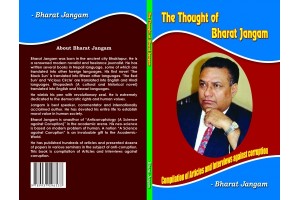
Bharat Mani Jangam, often referred to as Bharat Jangam, was born on 25 November 1947 in Bhaktapur, a historically and architecturally renowned city in the Kathmandu Valley, Nepal. He began writing from a young age, and at 15 his poems were published in a local literary magazine. Soon after, his stories and essays also appeared in print.
He graduated from Tribhuvan University and entered journalism in 1970, establishing himself as a fearless voice in Nepalese society.
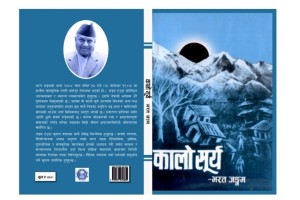
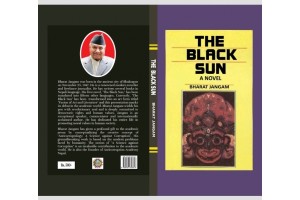
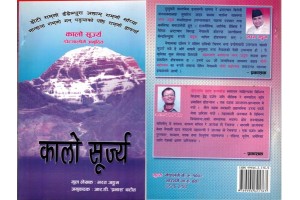
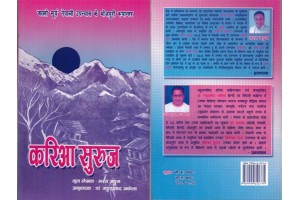
In 1979, Jangam created a sensation with his debut novel Kalo Surya (The Black Sun). At the time, Nepal was ruled under the Partyless Panchayat System, where criticizing the regime was considered a crime. Despite this, he boldly published a novel that exposed exploitation and suppression by the rulers. The book quickly gained popularity among Nepali readers and was later translated into multiple languages: English (1990), Russian and Chinese (1992), Hindi (1993 as Kala Suraj), as well as Bangla, Urdu, Assamese, and Kannada.
His second novel, Byuha Chakra (The Vicious Circle), published in 1984, offered a transparent critique of aristocratic rulers and the corruption embedded in the Panchayat system. It became widely popular and was later translated into English and Hindi.
From 1988 to 1991, Jangam served as Editor and Publisher of the weekly newspaper Nepal Awaz. Through journalism, he made significant contributions to the development and stability of democracy in Nepal. His political columns were later compiled into a book titled Pachas Prasang.
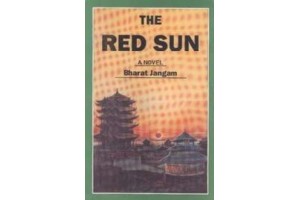
In 1993, he released Rato Gham (The Red Sun), a unique novel exploring socio-economic challenges in China after the 1949 revolution and Mao Zedong’s policies. The book also highlighted the plight of Tibetans under Chinese rule and exposed human rights violations. Jangam used this work to indirectly call for the liberation of millions suppressed under the Communist regime. Philosophically, he argued that human decisions are never final, as the human mind constantly seeks change and novelty despite suffering and struggle. The novel was praised by intellectuals and translated into English and Hindi the same year.
As a Nepali writer, Jangam succeeded in portraying the realities of China, a country that had long been closed to outsiders. His work raised critical questions about whether communism truly benefits a nation and its people.
In conclusion, Bharat Mani Jangam stands as both a literary figure and a social reformer. His novels and journalism are not only works of art but also instruments of resistance against corruption and authoritarianism. A humanist at heart, he wields his pen with revolutionary zeal, dedicating his life to defending democratic rights, exposing injustice, and upholding human values. His legacy continues to inspire readers and thinkers who believe in the power of literature to transform society.